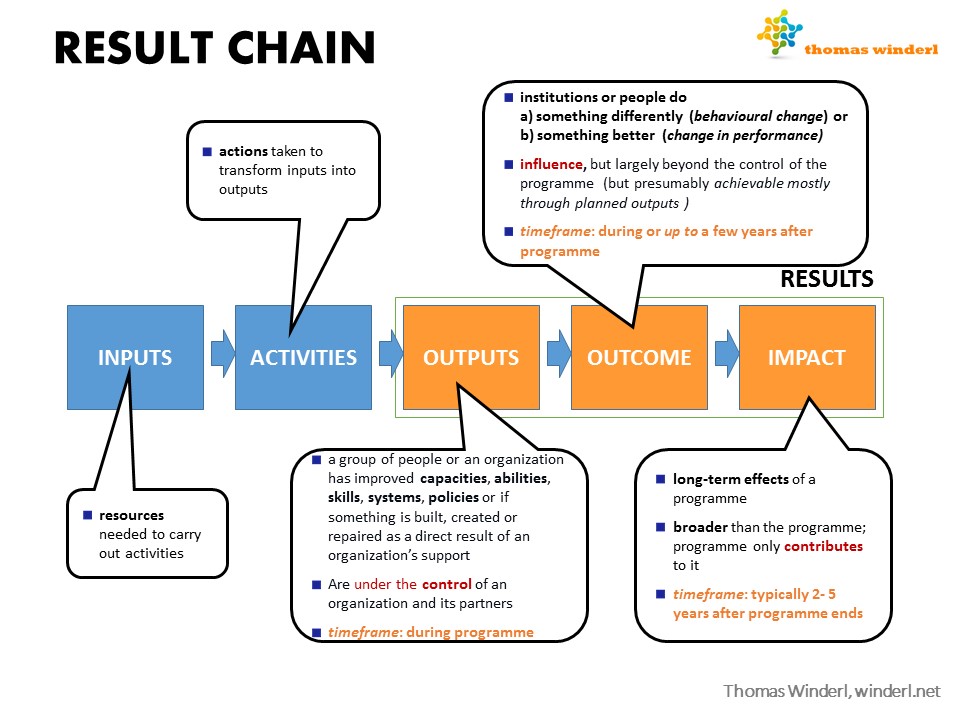
Monitoring and Evaluation are about measuring and tracking results. The results chain distinguishes between five logically connected elements: inputs, activities, outputs, outcomes and impact.
A Real-Life Example
I want to live a healthier life (impact). To do that, I want to reduce my weight (outcome). To reduce weight, I plan on eating more vegetables and exercising (outputs). These require conscious shopping and gym visits (activities). These activities require time and money (inputs).
Elements of a Results Chain
Inputs
Any programme requires resources. Typically: money, staff time, materials, equipment, infrastructure.
Activities
Actions taken that use inputs to produce outputs.
Outputs
The direct result of completed activities. Outputs are within your control — if you have the resources and time, you can largely guarantee delivery.
Outcomes
Something you hope to achieve as a result of what you do. Unlike outputs, you can only influence outcomes — they ultimately go beyond your control. Outcomes imply that institutions or people do something different or something better.
Impact
The long-term effect. Impact implies a detectable improvement in people's lives — economic, social, cultural, institutional, environmental changes. Typically detectable only after months or years.
Want to learn more? Check out the video course on Practical Results Based Management on Udemy.