Impact — you've been working on a brilliant initiative, and then someone asks: "So – what impact are you making?" It's a fair question. In this post we look at what impact means and how to measure it.
Impact – what is it?
Impact is the powerful and long-lasting effect that something we're doing has on a situation or on people. If we run a programme encouraging women to become entrepreneurs and some of them set up successful businesses — that's our impact.

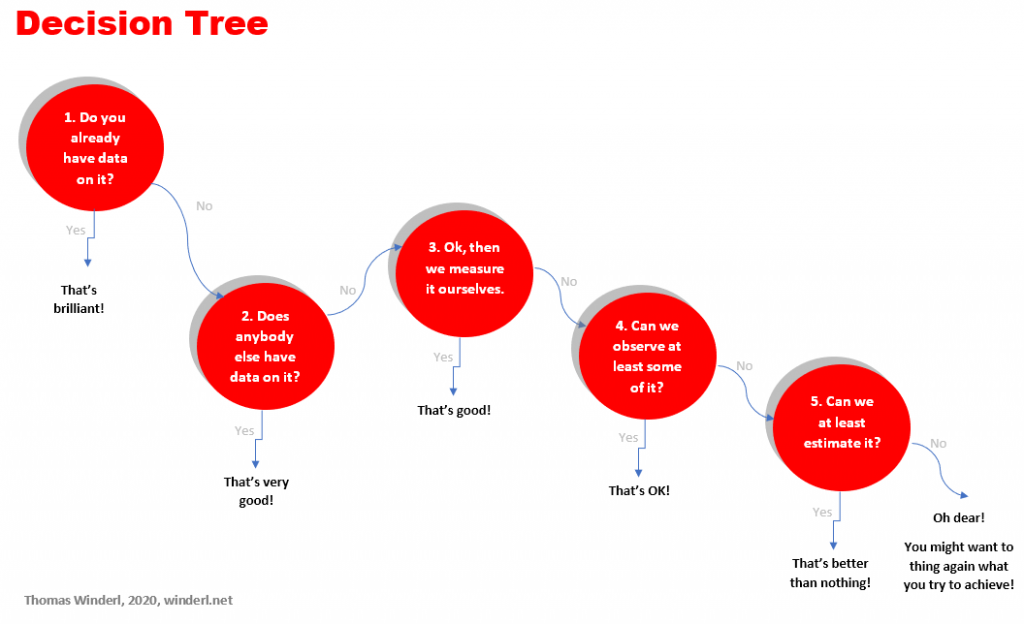
The 5 Steps to Measure Impact
Step 1: Dig deep into what we already know
We often have more data available than we realise — administrative data, financial data, training attendance sheets, participant profiles.
Step 2: Do some research about others
If we don't have data, someone else might. Search national statistics, international repositories, surveys and indices.
Step 3: Measure it yourself
Observe it directly, tag it to start tracking, or create an experiment. Use the full social sciences toolbox.

Step 4: Use sampling
Sampling is like magic: we observe just some of the things we are interested in, and from this we can learn about all things. Sample surveys can be small, simple and cheap.
Step 5: Estimations
If nothing has worked, we can get indications of impact by estimating data based on what we already know. It is better to be roughly right than precisely wrong.
Want to learn more? Check out the video course on Practical Results Based Management on Udemy.