Report writing is important. It showcases what we have achieved, is crucial to mobilise funding, and helps decision-makers improve programmes.
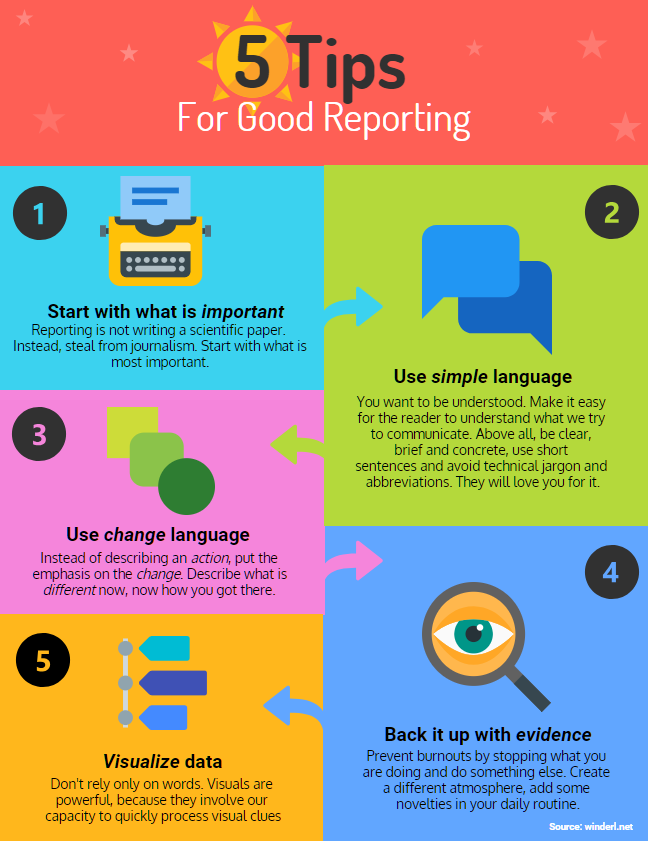
1. Start with what is important
Start with outcomes, outputs and — if feasible — impact. Develop a storyline that describes changes on the outcome level, followed by outputs delivered and key activities.
2. Use simple language
Make it as easy as possible for the reader to understand what you try to communicate, without oversimplifications.
3. Use change language
Instead of "Our organisation supported the peer education of 20,000 unemployed women", say "20,000 unemployed women and men now know how to start a small business". See How to use change language.
4. Back reports up with evidence
Any claim of success or progress must be backed up by evidence — anything presented to objectively support a claim.
5. Visualise data
Include simple visuals: charts, maps, graphs, time series, infographics, photos. Data visualisation makes reports dramatically more readable.
Want to learn more? Check out the video course on Practical Results Based Management on Udemy.