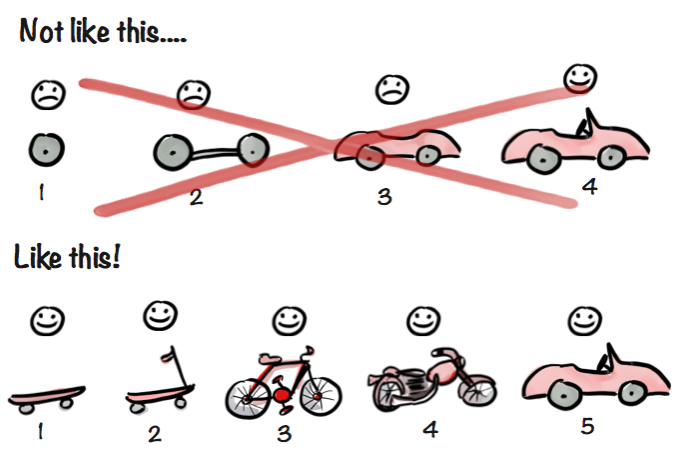
A minimum viable product – MVP in short – is a product with just enough features to gather validated learning about a possible intervention. It is deliberately imperfect; any additional work beyond what was required to start learning is waste.
When to use it
MVPs are the fastest way to get through the build-measure-learn feedback loop. The goal is to begin the process of learning, not end it. Unlike prototypes, MVPs are designed to test theories of change and fundamental development hypotheses.
Forms of MVPs
- Video MVP: Simple video demonstrating how a programme is meant to work
- 'Concierge' MVP: Testing with a single or very few clients
- 'Wizard of Oz' MVP: Clients believe they are interacting with a real service, which is in fact simulated by humans
An Example
In Papua New Guinea, UNDP tested a simple SMS-based system to address corruption. Tested with 1,200 staff, within four months it led to over 250 cases of alleged corruption under investigation. Based on this proof of concept, it was rolled out to 25,000 government officials.
Want to learn more? Check out the video course on Practical Results Based Management on Udemy.